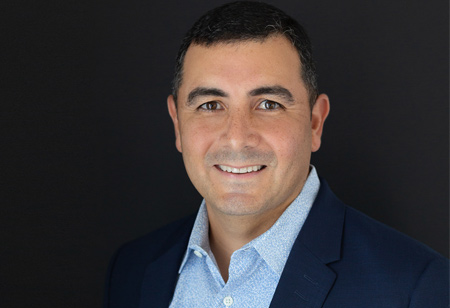

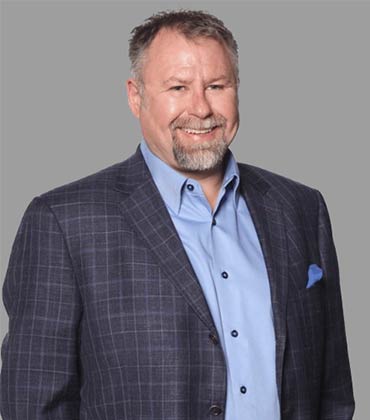
I came into aviation ground support equipment after building and later selling Minimizer, our family business in Blooming Prairie, Minnesota. Founded in 1946 by Frank Stinar, Stinar Manufacturing has spent "80 years" (1946 to 2026) supplying aviation ground support equipment worldwide, including passenger stairs, lavatory and potable water trucks and carts, maintenance platforms, high-lift trucks and other towable and specialty equipment. Its products have supported major airlines, the U.S. Air Force and Navy and even included stairs used with Air Force One. By the time I got involved, the company had struggled after earlier ownership changes and needed a turnaround.
What drew me was the combination of a strong brand with real heritage, products that matter for safety and operations and the chance to restore a Minnesota manufacturer while bringing work back to my hometown. We moved production from Eagan to Blooming Prairie, Minnesota, honored existing contracts (even the tough ones), focused on quality and parts availability for the life of the equipment and diversified beyond heavy government reliance toward FBOs, regional operators and commercial customers. We’re launching innovative products, the Limited Mobility Lift and the Stinar UVC system, an innovative ultraviolet-C (UVC) light solution designed specifically for sanitizing potable water holding tanks in GSE (Ground Support Equipment).
What keeps me committed is the tangible impact: equipment that gets people on and off aircraft safely and with dignity, supports military readiness and keeps operations moving. Seeing customers return, launching practical innovations like modular carts and our Limited Mobility Lift and building a reliable U.S.-made product line that exceeds IATA guidelines, that’s rewarding. It’s the same grind-it-out approach that worked in our other businesses: listen to the customer, overbuild where it counts and deliver.
Keeping Ground Support Equipment Operationally Ready
Aging fleets and deferred maintenance are real issues, operators often run equipment hard in harsh environments and downtime is expensive. Parts availability has historically been a weak point in the industry; if you can’t get the right certified part quickly, readiness suffers. Supply-chain disruptions, skilled labor shortages for both manufacturing and field maintenance and the need to support mixed fleets (older diesel units alongside newer electric or modular systems) add pressure.
For military and government users, long procurement cycles and strict requirements compound the challenge. On the commercial and FBO side, right-sizing equipment for smaller operations while still meeting safety and reliability standards is critical; many don’t need oversized units. We’ve addressed this by stocking parts for the life of the product, focusing on robust designs that hold up and offering flexible solutions (modular carts that can mount on compact chassis, for example) so operators can stay ready without excess complexity or cost.
Guiding Equipment Decisions with Safety and Reliability
Safety and durability first, Stinar equipment is overbuilt for a reason and designed to exceed IATA guidelines. Second, listen to the end user: what actually works on the ramp or at an FBO, not just what looks good on paper. We redesign based on real observations (like seeing carts towed awkwardly) and customer feedback. Third, reliability through lifecycle support: stocked parts, service commitment and designs that are serviceable long-term. Fourth, practical innovation over novelty solutions that solve real problems, such as compact modular systems for FBOs or our Limited Mobility Lift for dignified boarding on business jets or the new UVC system for sanitizing potable water holding tanks. Finally, keep manufacturing efficient and accountable so we can deliver on time and stand behind the product. If it doesn’t improve readiness or reduce total cost of ownership for the customer, we don’t do it.
GSE will become more flexible, accessible and efficient. Electrification and alternative power will grow, especially at busier airports and for operators focused on emissions, though robust diesel and hybrid options will remain important for reliability in varied conditions. Modular and multi-function systems will expand so smaller operators and FBOs can do more with less footprint and fewer vehicles.
-
Success rarely comes overnight; it comes from consistent execution, fixing what’s broken and delivering quality that people can rely on.
Accessibility will be a bigger focus, equipment that enables safe, dignified boarding for passengers with reduced mobility, the elderly and others will move from nice-to-have to expected, particularly in business aviation.
Data and diagnostics may help with predictive maintenance, but the fundamentals won’t change: equipment still has to be tough, easy to maintain and available when needed. We’ll continue evolving products like fully motorized limited-mobility lifts, UVC water tank sanitizing and right-sized service carts while staying grounded in proven, overbuilt engineering that supports both commercial and defense missions.
Building a Career on Commitment and Customer Focus
Grind it out and stay close to the customer and the product. Success rarely comes overnight; it comes from consistent execution, fixing what’s broken and delivering quality that people can rely on. Learn the operational realities on the ramp or at the FBO, what works in the real world beats theory. Build relationships and honor commitments, even when it’s hard. Diversify your thinking: government work is important, but commercial and private aviation needs are different and growing. Focus on the fundamentals, safety, durability, parts support and practical solutions, while being open to smart innovation. And remember that manufacturing and supporting this equipment is ultimately about enabling safe, efficient flight operations and serving people. Stay committed to that, keep improving and the rest follows.
Stinar overview video: https://youtu.be/1ZRa9yw8-zA